
The curtain motor is not the first motorization decision. The pocket, structural support, power feed, service access, and finished curtain weight come first. Leave those decisions until decoration begins and you may find a motor trapped above plasterboard, fabric parked across a sliding-door handle, or a power lead emerging at the wrong end.
Good villa interior design hides the machinery without making it impossible to repair. That principle belongs with other timeless interior details that conceal technology: quiet to look at, simple to operate, and accessible when something needs attention.
Is motorized drapery worth installing in a villa interior design?
Motorized drapery earns its cost on tall glazing, wide openings, heavy curtains, restricted-reach windows, and rooms needing daily glare control. Reachable secondary windows often work just as well with manual tracks.
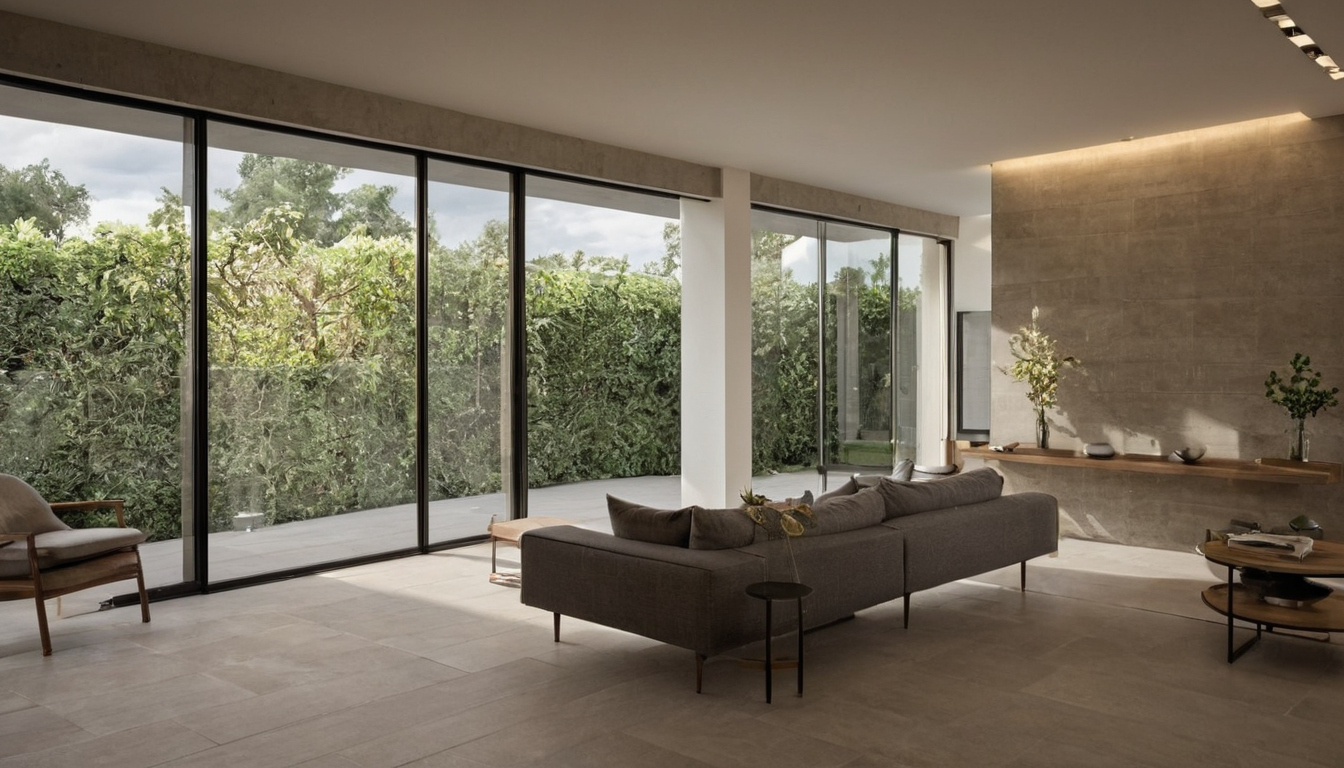
Is motorized drapery worth installing in a villa interior design shown with finish, fixture, and clearance relationships visible.
| Opening scenario | Access and use | Fabric layer | Sensible system | Provision to reserve |
|---|---|---|---|---|
| Double-height glazing | Restricted reach and regular glare control | Sheer or lined curtain | Hardwired motorized track | Support, power, and access panel |
| Wide living-room sliders | Frequent use; furniture may obstruct hand draw | Sheer plus blackout or lined layer | One or two motorized tracks | Separate controls and full stack-back |
| Primary bedroom | Daily privacy and blackout | Sheer plus blackout | Independent motorized layers | Bedside control and approved manual operation |
| Reachable guest window | Occasional use and clear approach | Single lined curtain | Manual track | Matching pocket and optional power route |
Motorized drapery earns its cost on large or difficult openings
A motor solves a clear operating problem when occupants cannot reach the curtain comfortably, furniture blocks its leading edge, or repeated pulling strains fabric and carriers. Record the opening width, finished drop, daily use, draw direction, and complete curtain weight. The supplier must confirm that the proposed motor and track suit the measured load and geometry.
Motorization may also improve independent operation, but it does not replace complete accessible planning. The 2010 ADA Standards for Accessible Design specify a 30 by 48 inch clear floor space for wheelchair positioning and place accessible dining and work surfaces between 28 and 34 inches above the finished floor where those requirements apply.
Manual drapery remains sensible for reachable secondary rooms
Manual tracks can protect the home interior design budget without creating a visible compromise. Use the same pocket line, heading, fascia, and finish as the motorized rooms. Reserve support, motor clearance, access, and a future power route where later conversion is plausible.
Ceiling coordination should include efficient lighting as well as curtains. ENERGY STAR states that qualified LED lighting uses at least 75 percent less energy and lasts up to 25 times longer than incandescent lighting. Confirm the exact fittings and their clearances before closing the ceiling.
Motorized drapery must be coordinated before the villa ceiling is closed
Select and draw the complete drapery package before ceiling framing, electrical first fix, plasterboard, lighting, and air-conditioning layouts are finalized.
A pre-ceiling sign-off prevents expensive motorized drapery changes
- Record finished floor and ceiling levels, pocket width, curtain drop, and site-measured opening dimensions.
- Show the track section, support points, bends, stack-back, motor end, cable route, access panel, and motor-removal path.
- Name responsibility for measurement, construction, power, controls, installation, commissioning, and curtain fitting.
- Obtain approval from the designer or owner, builder, electrician, ceiling contractor, automation contractor, and curtain supplier before ceiling framing or electrical first fix proceeds.
- Check concealed supplies, fire performance, and access against local requirements.
The curtain supplier must coordinate with lighting and air-conditioning layouts
The reflected ceiling plan should place tracks beside lights, sprinklers, detectors, speakers, diffusers, and access panels. Supply air must not push a sheer against glazing or a sliding-door handle. Once these clashes are removed, the pocket and parked fabric can be measured properly.
How large must a ceiling pocket and curtain stack-back be?
A ceiling pocket must fit the selected track, carriers, heading, motor, connectors, fabric layers, and service access. Stack-back must come from the finished curtain specification, not a guess based on window width.
Pocket dimensions follow the selected track and fabric layers
- Confirm pocket width, depth, end clearance, fixing points, and the path for removing the motor without cutting plasterboard.
- Set spacing between sheer and blackout tracks using the selected headings, fullness, lining, hems, and connectors.
- Allow for plaster thickness, shadow gaps, uneven walls, joinery, and finished ceiling surfaces.
- Mark the motor end, power lead, returns, carriers, and maintenance opening.
Curtain stack-back must clear glazing, handles, and views
The fabricator should calculate parked fabric for the selected split, one-way, or asymmetrical draw. Check both ends against glazing, handles, access panels, and door travel. Also plan large living room circulation before fixing curtain stack-back. Fabric parked behind a sofa or across an opening is not a small finishing defect.
The motor and track must be selected from measured curtain load and opening geometry
Motor selection must follow the completed curtain weight, track length, draw direction, bends, incline, and expected operating frequency. A nominal rating is not enough for dense blackout lining or extra-wide glazing.
Heavy lined curtains require verified motor capacity
The fabricator should state the finished curtain weight in kilograms, including face fabric, lining, interlining, headings, hems, overlaps, returns, trim, and attached hardware. Fabric weight per metre does not describe the complete load that the motor must start and stop.
The submission should record track length, bend quantity and radius, draw direction, mounting orientation, opening configuration, speed, duty cycle, operating limits, finish, warranty exclusions, and spare-parts support. Ask for current load tables and written manufacturer or authorized-installer confirmation for the exact assembly.
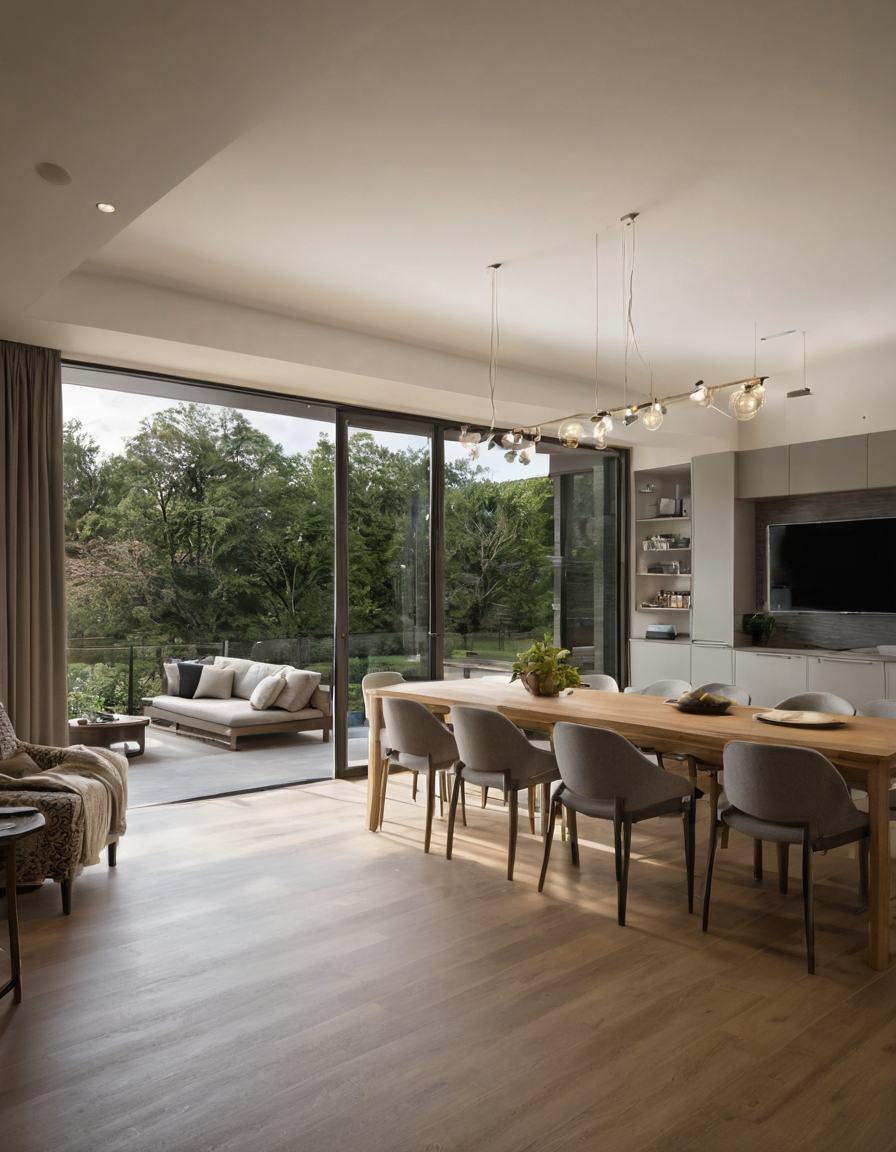
The motor and track must be selected from measured curtain load and opening geometry shown with finish, fixture, and clearance relationships visible.
Adhesives, coatings, paints, and cleaning products used around the pocket may release volatile organic compounds. The U.S. Environmental Protection Agency recommends increasing ventilation when using products that emit VOCs indoors.
Track supports must transfer the curtain load into structure
The supplier should mark support spacing and fixing points. The builder or engineer should confirm the substrate and fasteners. A track fixed through plasterboard alone can sag, loosen, crack the pocket edge, and grow noisy unless the approved assembly permits it.
Provide backing before closing the pocket and keep the motor-removal route clear. If a leak or condensation wets the curtain or pocket, the EPA advises drying damp materials within 24 to 48 hours to help prevent mold growth.
Power, controls, and manual override determine whether motorized drapery remains usable
A reliable system needs an agreed power source, accessible isolation, compatible controls, and defined behavior during power or network failure. Hardwired power usually suits a new villa. Battery tracks can suit finished rooms.
Hardwired power is easiest to conceal during a new villa build
The first-fix drawing must show the correct motor end, required supply, cable route, outlet or junction box, isolation, and access panel. Confirm switches, remotes, automation, scenes, and offline operation. Test the motor before the pocket closes. The EPA identifies paints, varnishes, waxes, cleaning products, building materials, and furnishings as common indoor VOC sources, so ventilate during nearby finishing work.
Battery-powered tracks trade easier installation for scheduled maintenance
Record the manufacturer’s cycle estimate for the proposed load and use, plus the charging point, replacement method, environmental limits, battery warranty, and local availability. A charger that needs a ladder over a sofa is poor planning.
Manual override must work without damaging the motorized track
Specify the manufacturer-approved touch-motion, hand-pull, or emergency-release method for the exact motor and carriers. Never assume occupants can force the curtain during an outage. Commission power-cut and controller-failure behavior, then demonstrate it at handover.
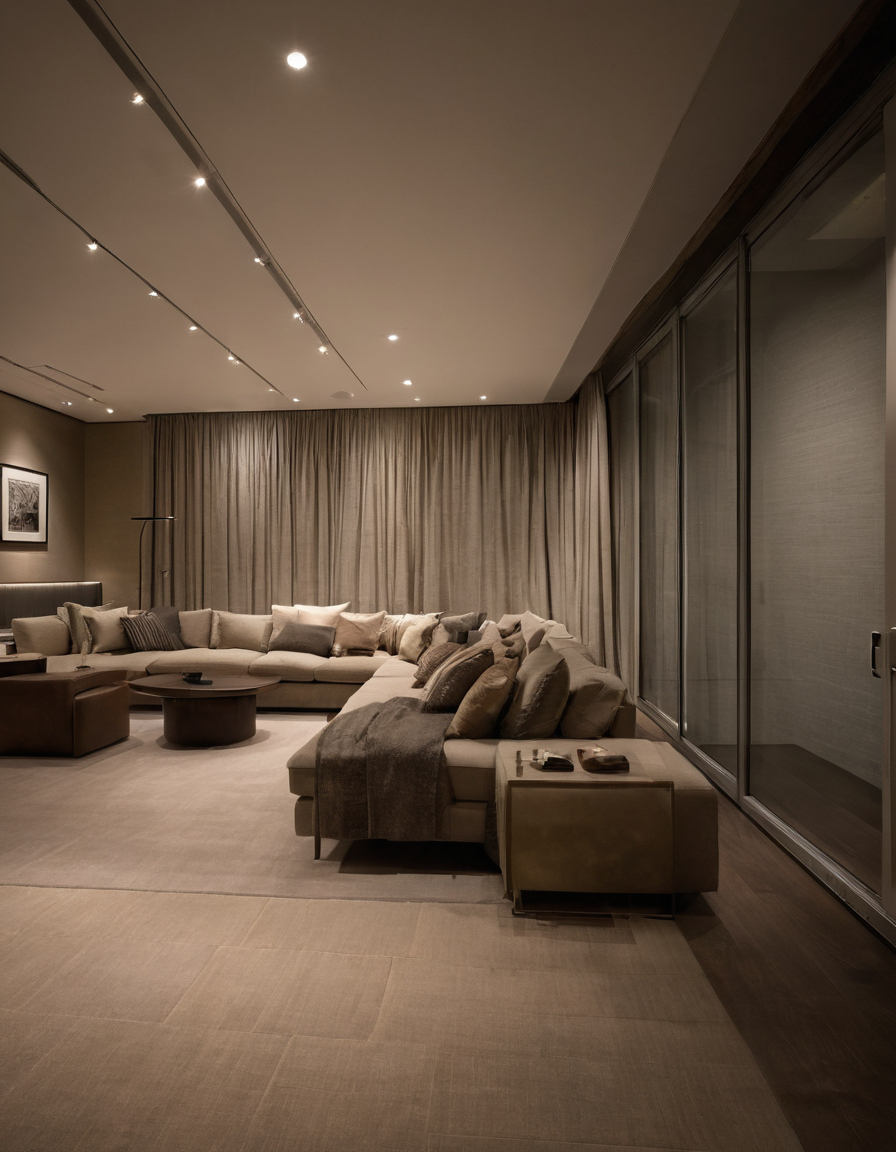
Power, controls, and manual override determine whether motorized drapery remains usable shown as a planning reference for layout, scale, and material decisions.
Coastal villa curtains need fabric, lining, and hardware selected for sun and humidity
Motorization cannot protect unsuitable fabric from UV fade, moisture, or salt-laden air. Coastal luxury villa design needs documented fabric performance, stable lining, cleanable construction, and corrosion-conscious tracks, carriers, brackets, fasteners, and exposed hardware.
Fabric performance data matters more than a generic outdoor label
Record window orientation, glazing, overhang, direct sun, humidity, and coastal exposure. Request fiber content, lightfastness testing, dimensional stability, cleaning instructions, and written suitability for full-height drapery. Solution-dyed fabric can help in demanding sun exposure, but the sample must still have the softness and drape the room needs.
Lining can improve privacy and light control but increases motor load
Privacy lining, blackout lining, and interlining change both performance and weight. Update the finished weight schedule and obtain fresh motor approval after the layers are selected. Check local fire-performance requirements and follow the fabric maker’s cleaning and drying instructions.
Where should a villa budget save or spend on motorized drapery?
Spend on structural support, correctly sized tracks, accessible power, service access, reliable controls, and fabric suited to sun and humidity. Save by ranking rooms, choosing simple controls, and fitting matching manual tracks in secondary spaces.
Compare complete installed systems rather than headline motor prices
Obtain at least three dated local quotations for identical measured openings and curtain specifications.
| Cost group | Items to compare |
|---|---|
| Track system | Manual, battery-powered, and hardwired options |
| Controls | Switches, remotes, modules, integration, and commissioning |
| Building work | Power, supports, pockets, access panels, installation, and making good |
| Textiles | Face fabric, lining, heading, fabrication, delivery, and hanging |
Each quotation should state currency, tax, location, date, lead time, exclusions, and warranty. Ask about replacement motors, batteries, remotes, carriers, and control modules. A cheap motor price says little if ceiling work, commissioning, and curtain fitting sit outside the quotation.
A room-by-room motorization plan protects a limited budget
Rank rooms by opening size, reach, daily use, glare, privacy, and blackout demand. Main living spaces, primary bedrooms, and double-height glazing usually come first. Guest rooms can use manual tracks while keeping the same quiet pocket detail.
Before closing the ceiling, approve the room schedule, finished curtain weights, track drawings, pocket dimensions, power locations, access routes, controls, three like-for-like quotations, and each trade’s written scope.
Frequently asked questions
What are the practical benefits of motorized curtains in a villa?
They make tall, wide, heavy, or obstructed curtains easier to operate and can provide consistent glare, privacy, and blackout control.
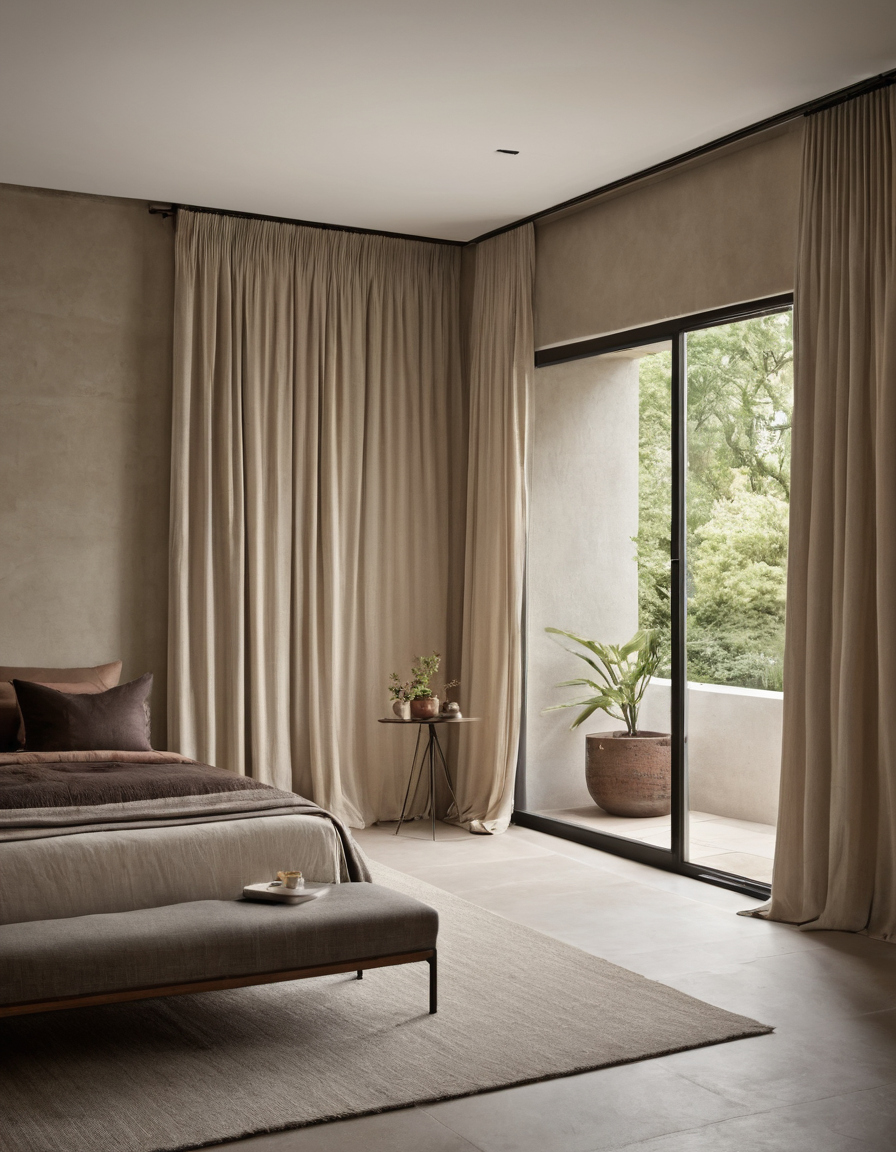
Where should a villa budget save or spend on motorized drapery shown with floor, wall, and fixture relationships visible.
How expensive are motorized drapes compared with manual tracks?
Costs vary by opening, load, controls, electrical work, ceiling work, fabric, and local labor. Compare complete installed quotations rather than motor prices.
What ceiling pocket dimensions are needed?
There is no safe universal dimension. Use the approved shop drawing for the exact track, motor, headings, fabric layers, clearances, and removal path.
Should a new villa use hardwired or battery-powered curtains?
Hardwired systems usually suit new construction. Battery systems suit rooms where new concealed wiring would cause costly repairs, provided charging and replacement remain accessible.
Which curtain features are becoming difficult to maintain?
Proprietary controls without local support, inaccessible batteries, trapped motors, discontinued gateways, and systems that depend entirely on internet access create avoidable maintenance problems.